
As the first chilly days and autumn rains arrive, most property owners begin thinking about the heating season. Yet few ask the key question: how well is their home prepared to keep warmth in and moisture out?
The roof and the building’s thermal envelope are every home’s first line of defence. Cracks, damaged joints and thermal bridges can send heating costs soaring while increasing the risk of mould and structural damage. Autumn offers a crucial window in which a technical inspection can help prevent costly repairs.
1. Why Autumn Rather Than Winter or Spring?
Many people put off inspections until they notice a specific problem, such as a leak during heavy rain or mould behind a wardrobe in January. This is a reactive approach rather than a preventive one.
- Favourable weather for repairs: Autumn temperatures are often still suitable for applying construction materials such as waterproofing membranes, renders, sealants and adhesives. Many of these require minimum application temperatures of around 5°C to 10°C, depending on the product, to dry or cure properly.
- Early detection during autumn rains: The first prolonged rainfall can reveal hidden leaks and areas of standing water before freezing winter conditions worsen existing cracks.
- Suitable temperature differences for thermal imaging: An accurate thermal imaging inspection requires a sufficient temperature difference between indoors and outdoors. Once the heating is switched on in autumn, conditions often become suitable for identifying thermal bridges.
2. The Roof: What Do We Look for During a Technical Inspection?
The roof is one of the most exposed parts of a building. Whether it is a pitched tiled roof or the flat roof of a modern apartment building, the inspection covers several critical areas:
| Roof Element | Common Defects | Consequences in Winter |
|---|---|---|
| Roof tiles / waterproofing membranes | Broken tiles, separated seams in bituminous membranes | Water ingress and damage to the underlying roof structure |
| Gutters and flashings | Blockages caused by leaves, damaged flashings around chimneys | Overflowing water, icicles and ice build-up |
| Vapour barriers and roof ventilation | Damaged or discontinuous vapour barriers, inadequate ventilation | Condensation within the insulation layer and decay of timber beams |
3. Insulation and Thermal Imaging: How Can Hidden Heat Loss Be Detected?
A visual inspection alone is often insufficient when assessing insulation. An experienced inspector uses specialist equipment to help evaluate the quality of the installation.
The Role of Thermal Imaging
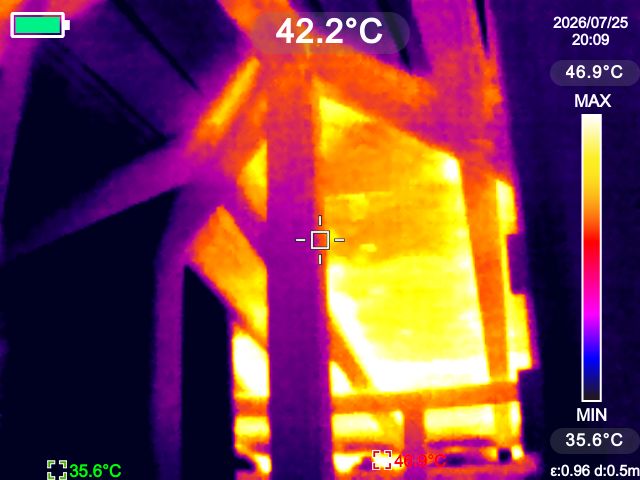
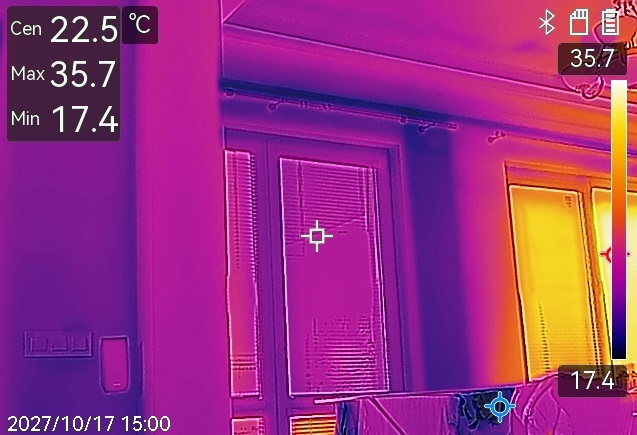
A thermal imaging camera helps identify patterns that may indicate:
- Thermal bridges: Areas around windows, balconies and reinforced concrete elements where heat escapes more readily.
- Missing or settled insulation: Gaps in insulation behind rendered surfaces or within mineral wool insulation in loft spaces.
- Hidden moisture: Areas where water may have penetrated behind the external render, even though the surface appears dry. In winter, this moisture can freeze and cause the render to chip or break away. Suspected moisture should be checked with a moisture meter.
Steps in an Autumn Inspection
- Book an inspection: Contact the experts at Homeplus.bg to arrange an autumn technical inspection of your property.
- Visual inspection and imaging: The inspector examines the roof, façade and loft spaces, using a thermal imaging camera, a moisture meter and, where necessary, a drone.
- Receive a detailed report: You receive a technical report identifying the locations of detected defects, supported by photographs and recommendations for remedial work.
- Arrange timely repairs: Addressing defects in autumn can help avoid urgent and expensive emergency repairs during winter.
Conclusion
Investing in an autumn roof and insulation inspection can pay off through lower heating bills, comfortable indoor temperatures and peace of mind during the coldest months of the year. Do not wait for the first snowfall to discover your home’s weak points.